What is a radiant barrier, and does it work in Texas?
What the foil does, how much it can help, and how it fits with attic insulation.
On a Texas summer afternoon your attic can be the hottest space you own. Without enough insulation on the attic floor, that heat pushes into the rooms below for hours. Sealing the gaps, topping up the insulation and making sure the attic can vent its heat is usually the most cost-effective comfort upgrade we offer.
Insulation and air sealing stop attic heat from reaching your rooms. Venting moves that heat and moisture out of the attic. We check and plan both at every assessment.
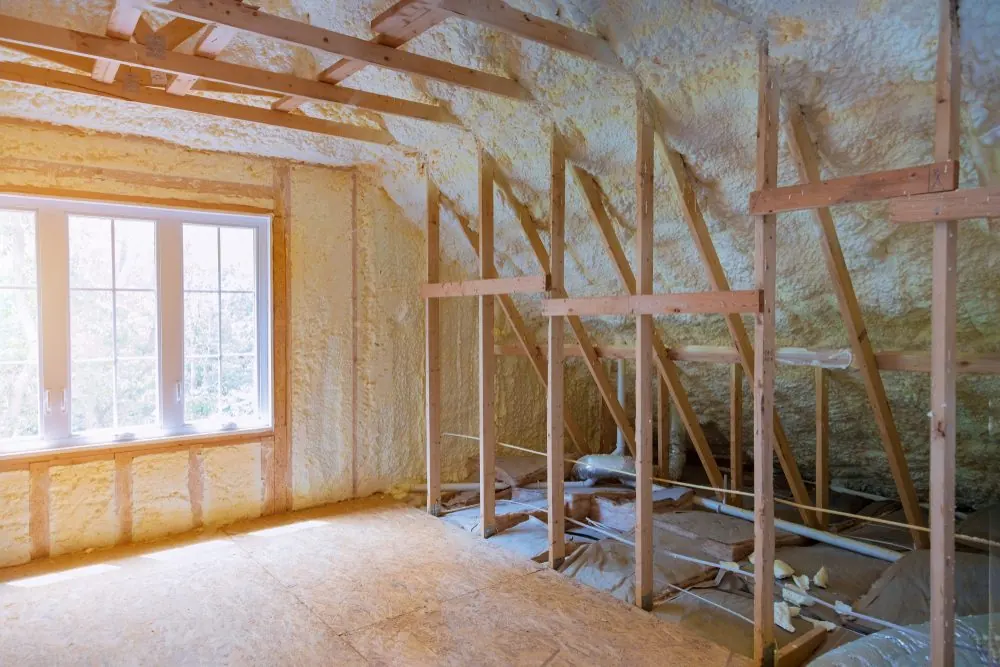
We seal the gaps first, then blow in insulation to the depth our climate calls for.
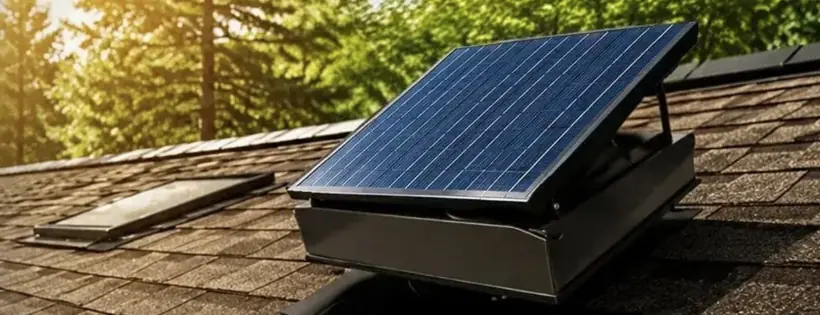
Balanced airflow lets trapped heat and humidity escape, with a solar fan where the attic needs more help.
ENERGY STAR recommends R-49 for an uninsulated attic in our climate zone, or adding about R-38 if you already have 3–4 inches. That's well over a foot of blown-in insulation. We'll measure what you have today and show you the gap.
Source: ENERGY STAR, recommended home insulation R-values (climate zone 3)
Insulation slows heat, but it doesn't stop air. Hot attic air leaking down through gaps around lights, wiring and the attic hatch can undo a lot of the benefit, so we seal those first.
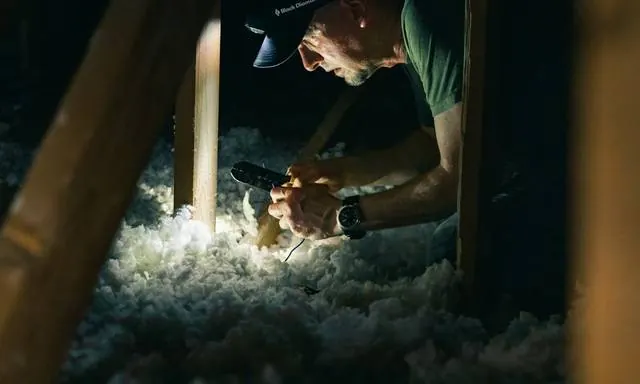
We check the depth and condition of your current insulation, ventilation, and any signs of moisture or damage.
We seal the gaps between your living space and the attic: top plates, wiring and plumbing holes, light fixtures, and the attic hatch.
Baffles at the eaves keep new insulation from blocking the airflow your roof needs.
Insulation goes in evenly to the recommended depth, with depth markers so you can see what you paid for.
If the bedrooms upstairs are several degrees warmer than downstairs all summer, the attic is the first place to look.
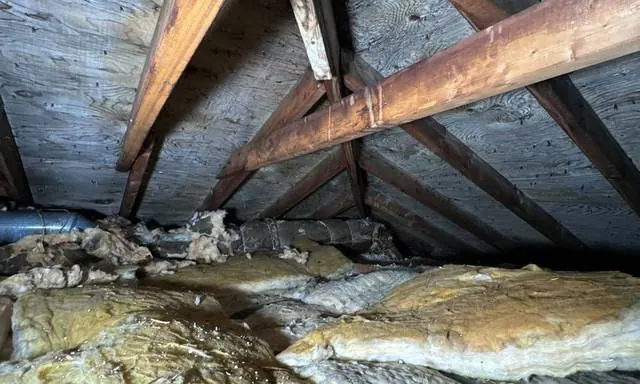
If the top of your insulation is level with or below the ceiling joists, there isn't much there.
On summer afternoons the system runs constantly and still can't keep up.
Put your hand on an upstairs ceiling at 5 p.m. in July. It shouldn't feel warm.
R-value measures how well insulation resists heat. Blown cellulose packs more R-value into each inch than blown fiberglass, so the same target takes less depth.
| TARGET | BLOWN FIBERGLASS | BLOWN CELLULOSE | WHEN IT APPLIES IN DFW |
|---|---|---|---|
| R-30 | about 11–14 in | about 8–10 in | A common level in older homes; below today's recommendation for our climate |
| R-38 | about 14–17 in | about 10–12 in | How much ENERGY STAR suggests adding if you already have 3–4 inches |
| R-49 | about 18–22 in | about 13–15 in | ENERGY STAR's recommendation for an uninsulated attic in climate zone 3 |
Depths use about R-2.2 to R-2.7 per inch for blown fiberglass and R-3.2 to R-3.8 per inch for blown cellulose. Exact depth depends on the product; we follow the manufacturer's coverage chart and install depth markers. Sources: ENERGY STAR, U.S. DOE Building America Solution Center. More in how much attic insulation a DFW home needs.
Most of the leaks between your living space and the attic are hidden under the old insulation. These are the spots we seal before anything is blown in.
Often an unsealed, uninsulated panel. We weatherstrip it and insulate the lid or add an insulated cover.
Holes around can lights and ceiling boxes pull hot attic air into rooms. Fixtures rated for contact with insulation can be sealed; others need a proper cover.
The tops of interior walls are open to the attic in many homes. Sealing the gaps along them stops air moving through the wall cavities.
Every pipe, vent stack and wire that passes through the ceiling leaves a gap. We seal them with foam or caulk.
Openings around flues need fire-rated materials and the right clearance, never ordinary foam.
Framed boxes above cabinets and around ducts are often open to the attic on top. We cap and seal them.
Source: ENERGY STAR, why seal and insulate.
Both are proven blown-in insulations for a vented DFW attic. We recommend one based on your attic, and either one goes in over a sealed attic floor.
| MATERIAL | WHAT IT IS | R-VALUE PER INCH | GOOD TO KNOW | BEST FOR |
|---|---|---|---|---|
| Blown fiberglass | Loose glass fibers, often with recycled glass content | About R-2.2 to R-2.7 | Lightweight; doesn't absorb moisture; needs more depth for the same R-value | Most attics, especially with ample height |
| Blown cellulose | Recycled paper fibers treated for fire and pest resistance | About R-3.2 to R-3.8 | Denser, so it fills around obstructions well; settles somewhat, so it's installed a little deeper | Attics with tight clearances or lots of framing |
| Spray foam (roof deck) | Foam sprayed on the underside of the roof | About R-3.6 (open cell) to R-6 (closed cell) | Seals and insulates in one step, at a much higher cost | Attics with HVAC and ducts that are hard to seal from the floor |
Compare in detail: spray foam vs. blown-in insulation.
Insulation slows heat on its way down. Venting moves hot, damp air out of the attic in the first place. The two work together, so we check both at every assessment.
Soffit vents low on the roof let cooler outside air into the attic. Blocked or painted-over soffits are one of the most common problems we find, and baffles keep new insulation from covering them.
Ridge vents or roof vents near the peak let rising hot air escape. Without an exit, heat builds up under the roof deck all afternoon.
Intake and exhaust need to be in balance so air flows across the whole attic, not in short circuits. A balanced attic runs cooler and stays drier, which helps protect the roof deck and shingles.
 40 Watt Solar Attic Fan, Builder Series
Genview is an authorized dealer for Remington Solar attic fans. The 40 Watt Builder Series is a steel-built, solar-powered roof fan that pulls hot, humid air out of the attic on its own. A built-in thermostat and humidistat switch it on when the attic gets hot or damp, and the included 110V hybrid adapter keeps it running at night and on cloudy days.

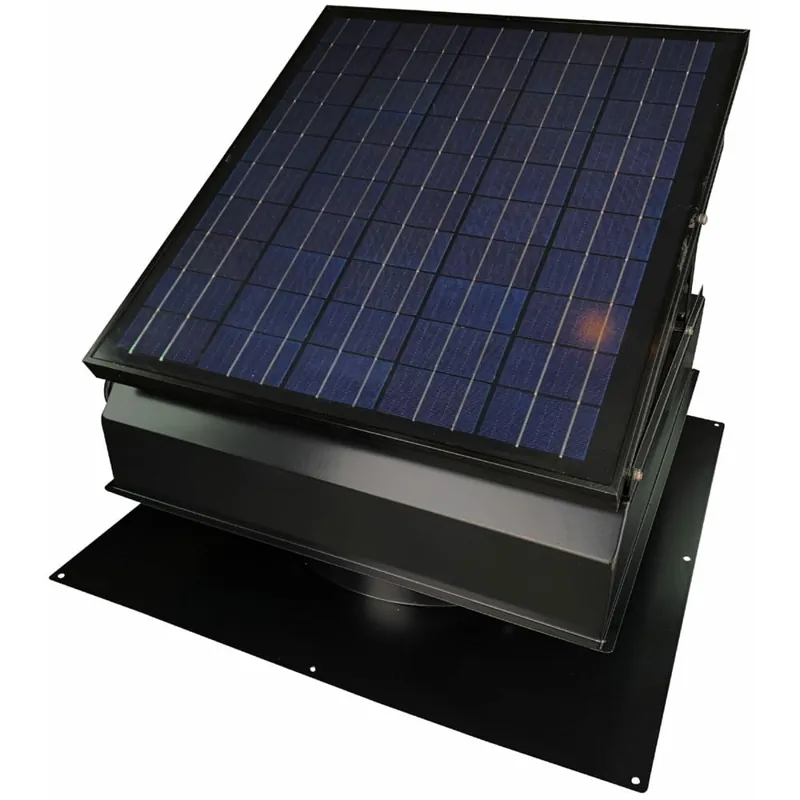
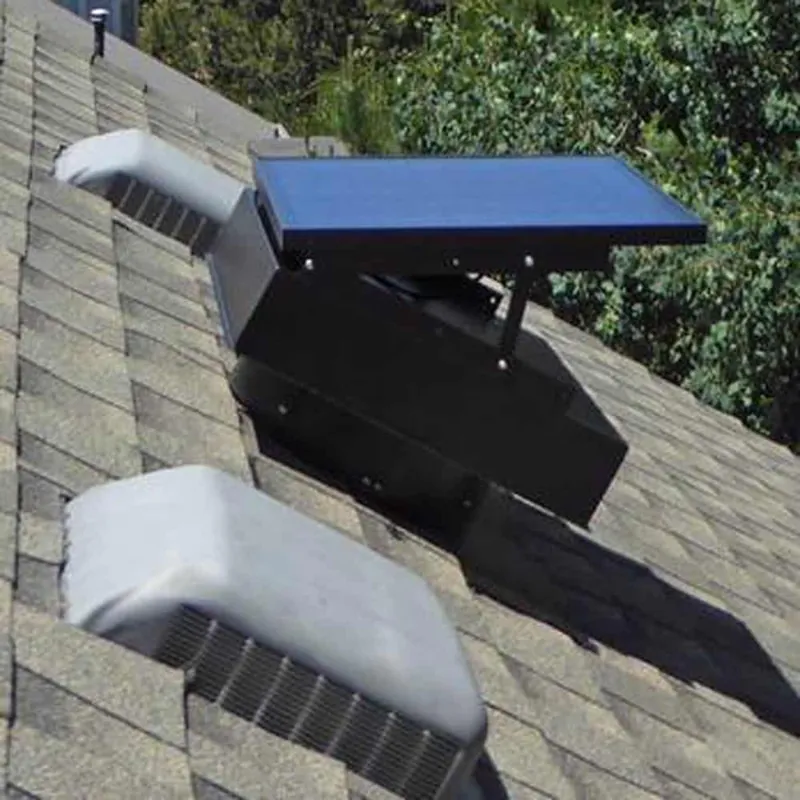
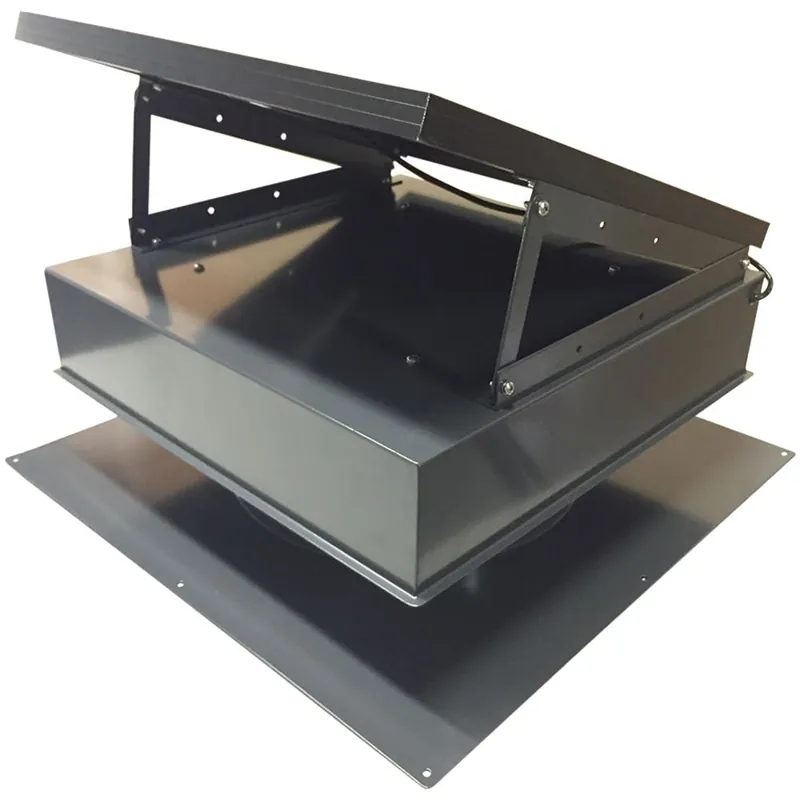
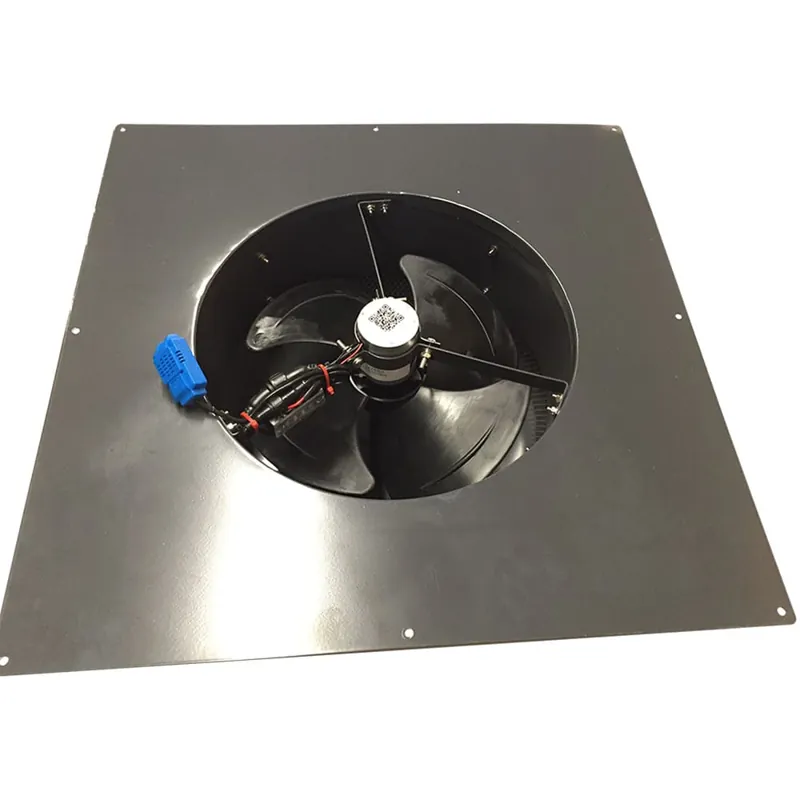
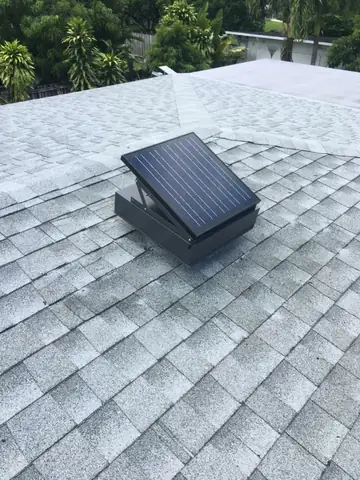
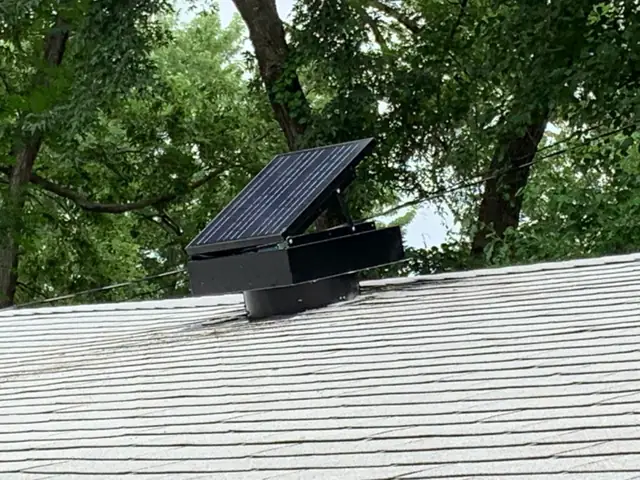
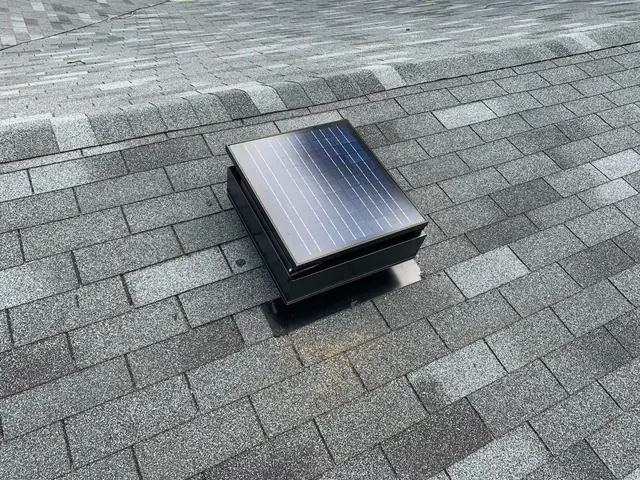
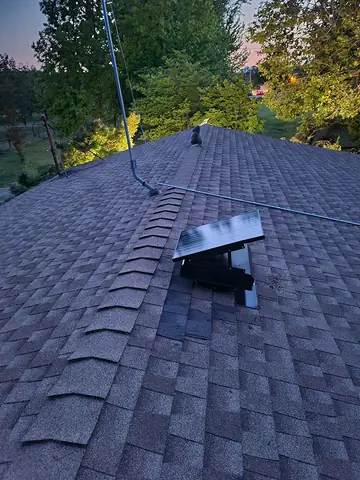
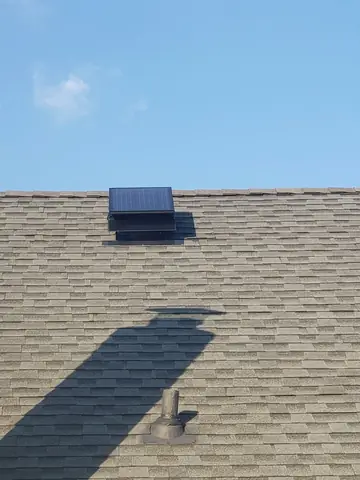
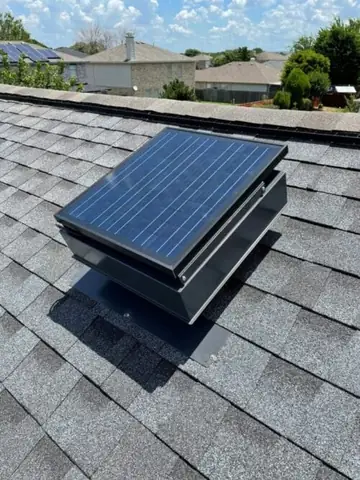
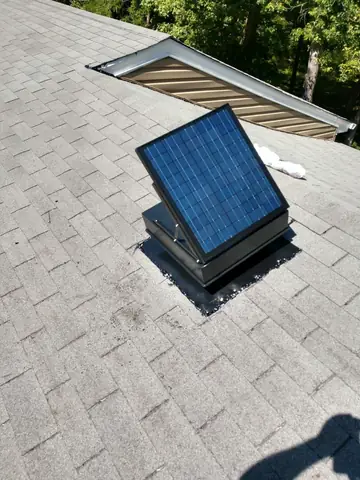
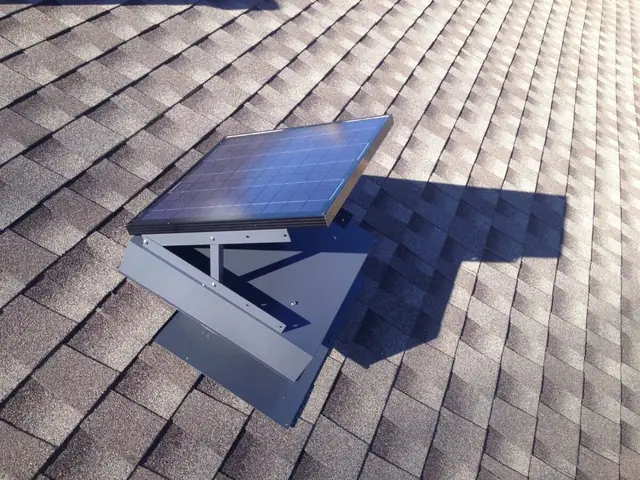
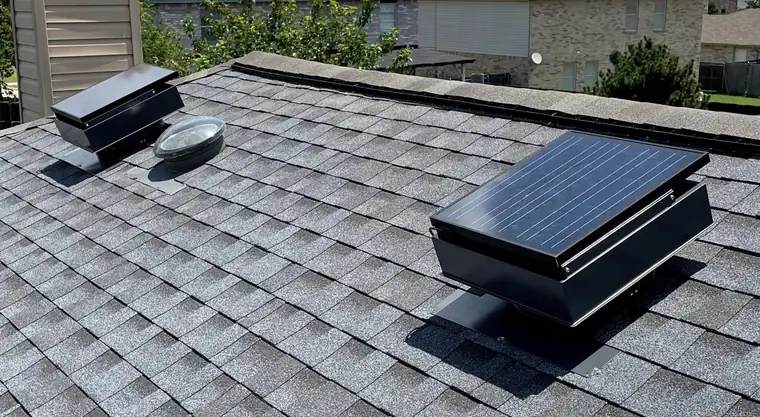
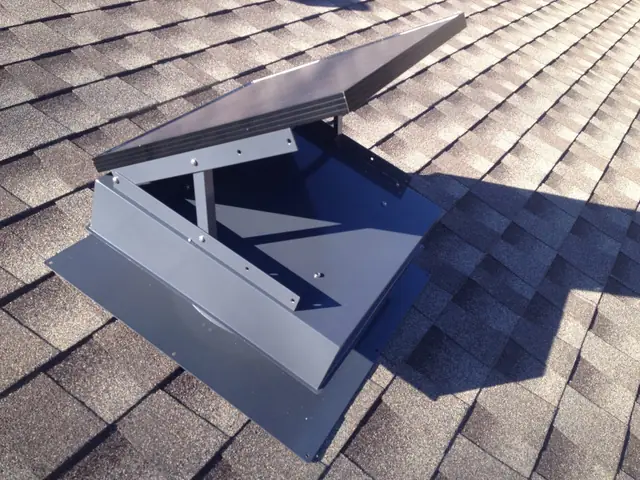
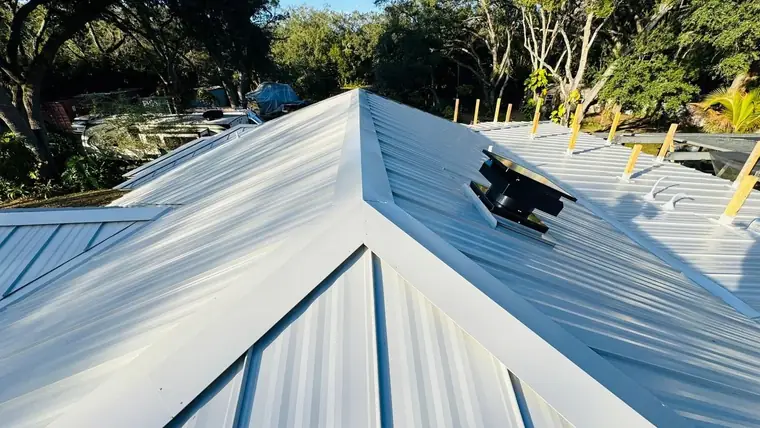
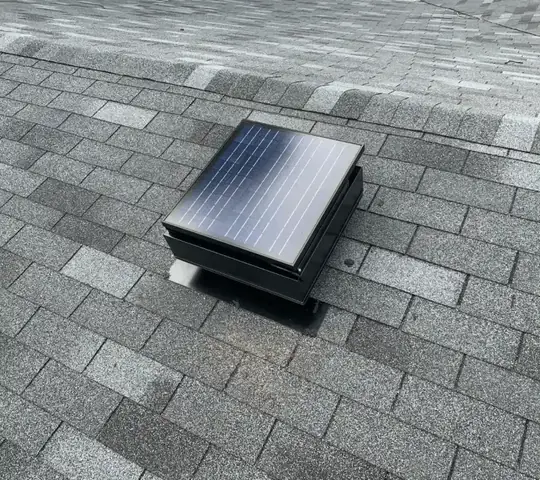
Remington Solar attic fans on shingle and metal roofs. Photos: Remington Solar.
| REGULAR ELECTRIC ATTIC FAN | 40 Watt | |
|---|---|---|
| Power | Wired to house electricity; typical models draw about 250–300 watts while running | 40 watt solar panel, plus a 110V hybrid adapter for nights and cloudy days |
| Running cost | Adds to your electric bill every hour it runs. A Florida Solar Energy Center review found that draw is often greater than the cooling energy it saves | Uses no grid power in daylight; draws house power only through the hybrid adapter at night or in low light |
| Installation | Needs a dedicated electrical connection, often by an electrician | Solar powers it directly; the hybrid adapter connects to 110V power through a surge protector |
| Controls | Usually a thermostat; humidity control varies by model | Thermostat and humidistat built in: on at 80°F or 75% humidity |
| Noise | Conventional motors are often noticeable from inside | Quiet brushless DC motor |
| Build | Varies by brand | Powder-coated steel, stainless screen and hardware, Texas Windstorm Certified |
| Warranty | Varies by brand | Limited lifetime warranty on parts |
| Needs to work well | Either way: clear soffit intake and an air-sealed ceiling, so the fan pulls in outside air, not cooled air from the house. We check both at your assessment. | |
Source: Florida Solar Energy Center, Performance Assessment of Photovoltaic Attic Ventilator Fans (2000), which notes conventional attic ventilators often draw 250–300 W. Remington Solar specifications.
The 110V adapter must be connected through a surge protector; a power surge or lightning strike can damage it and void its warranty coverage.
Insulation and air sealing come first. These can add to the result, depending on your home.
Reflective foil that reflects the sun's heat back toward the roof. Most useful when ducts run through the attic. Does a radiant barrier work in Texas?
Leaky attic ducts can lose cooled air before it reaches upstairs rooms. ENERGY STAR notes ducts commonly lose 20–30% of the air they carry. Why the upstairs runs hot
Once the attic is handled, sunny windows and drafty doors are the next places heat gets in. See how the whole house works together
Don't see your question? Call 469.340.4780 or book a free home assessment.
 INSULATION
What the foil does, how much it can help, and how it fits with attic insulation.
 INSULATION
Recommended levels for our climate, how to check yours, and when topping up is worth it.
 INSULATION
Broad price ranges for blown-in, spray foam and removal, and what changes the number.
We'll measure it during your free assessment.