How much do replacement windows cost in Dallas–Fort Worth?
Typical per-window and whole-house ranges, what drives the price, and how to compare quotes.

Short answer: a little, not a lot. And that's okay. New windows are one of the best upgrades you can make to how your home looks and feels. But if the main goal is a lower utility bill, they usually aren't the first thing we'd do. Here's why, and what we'd do instead.
In a North Texas summer, heat gets into your home three ways: down through the attic, in through air leaks, and through the glass. Windows are only one of those paths. In many DFW homes, especially older ones, the attic is the bigger problem: thin insulation lets a 130-degree-plus attic warm your ceilings all afternoon and into the night.
Replacing windows reduces the heat that comes through the glass and the air that leaks around old frames. It doesn't touch the attic. So the share of your bill that new windows can affect is real, but limited.
Windows are a comfort and curb-appeal upgrade that also saves some energy, not an energy upgrade that also looks nice.
Replacement windows cost thousands of dollars for a typical home. The yearly energy savings are a fraction of that. Do the math and the payback period from energy savings alone is often measured in decades, not years. Anyone promising that new windows will “pay for themselves” quickly should show you the numbers.
For most homes we assess, the fastest return comes from the attic: sealing the air leaks between your living space and the attic, then bringing insulation up to the recommended level. ENERGY STAR recommends R-49 for an uninsulated attic in our climate zone. It's usually done in a day, and you feel it the first hot afternoon.
After that, look at the doors and windows that take the most sun, typically on the west and south sides of the house. You don't have to replace every window at once.
Enter your square footage, windows and doors for a quick, broad estimate.
Replace your windows because they're failing, because you're tired of drafts and noise, or because you want your home to look its best. You'll save some energy along the way. If cutting your bill is the main goal, let us look at your attic first. We'll tell you honestly where your money goes furthest.
Sources: ENERGY STAR, recommended home insulation R-values; IRS, Energy Efficient Home Improvement Credit.
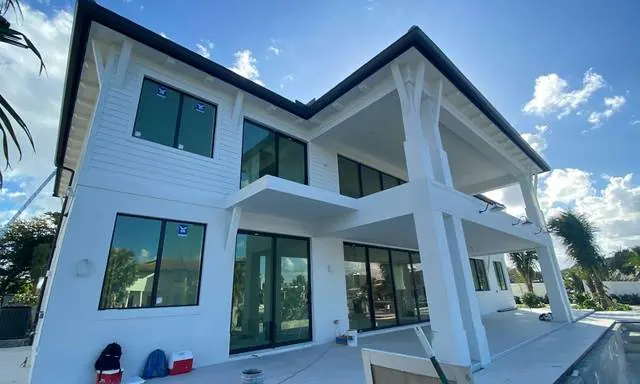 WINDOWS
Typical per-window and whole-house ranges, what drives the price, and how to compare quotes.
 COMFORT
The usual culprits, from the attic to the ductwork, and which fixes actually work.
 INSULATION
What the foil does, how much it can help, and how it fits with attic insulation.